Pilates Criss-Cross for Men Who Hate Crunches
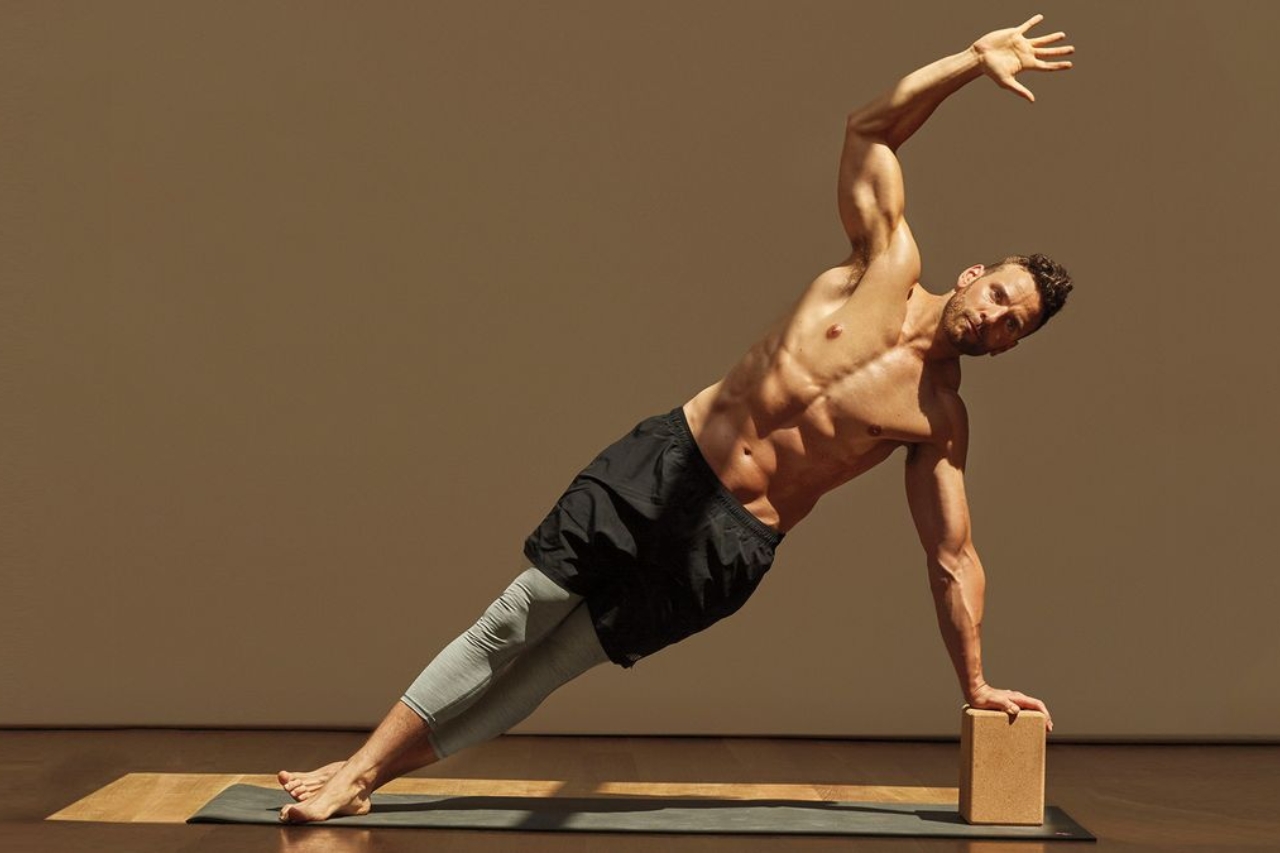
pilates criss-cross
Let’s be honest, most guys rush through bicycle crunches without actually training the core. It turns into fast leg flailing, neck pulling, and a lot of momentum. That’s why more trainers are shifting toward the Pilates criss-cross approach instead. It looks slower. Simpler too. But don’t let that fool you. This move builds rotational control, deep core stability, and real-world strength in a way traditional crunches rarely do.
The biggest difference? The Pilates criss-cross forces your core to stabilize before it rotates. That changes everything.
Why the Pilates Criss-Cross Works Better
The standard bicycle crunch mainly targets surface abs. You feel the burn quickly, but that doesn’t always mean the movement is effective. In many cases, the hip flexors take over while the lower back absorbs unnecessary stress.
The Pilates criss-cross slows the movement down and shifts the focus toward deep stabilizer muscles. Your obliques stay under tension longer. Your pelvis stays controlled. Your spine moves with intention instead of momentum.
That matters more than people realize. In the world of Men’s Pilates 2026, the focus has moved toward functional fitness trends that improve daily movement, athletic performance, and injury prevention. The criss-cross fits perfectly into that shift.
The Problem With Bicycle Crunches
Here’s the thing. Most men perform bicycle crunches too quickly to actually engage the core properly.
Instead of building functional core activation, they end up:
- Pulling on the neck
- Arching the lower back
- Swinging through repetitions
- Using hip flexors more than abs
- Losing rotational trunk stability
That’s why many trainers now consider the Pilates vs bicycle crunches debate pretty one-sided for long-term strength development. If your goal is oblique workouts that transfer into sports, lifting, or daily movement, speed is not your friend. Control is.
How the Pilates Criss-Cross Builds Functional Strength
The beauty of the Pilates criss-cross is that it trains the body as a connected system.
As you rotate, your obliques stabilize the torso while your transverse abdominis supports the spine underneath. That combination creates deep core stability instead of surface-level fatigue.
This becomes especially valuable for:
- Rotational strength in golf or tennis
- Mobility for athletes
- Lower back support
- Posture improvement
- Injury prevention during lifting
Better yet, it teaches the ribcage and pelvis to move together correctly. That’s huge for men who sit all day or deal with stiffness from heavy training.
How to Do the Pilates Criss-Cross Correctly
Most beginners overcomplicate it. Don’t. Start slow and focus on positioning.
Step-by-Step Setup
Lie flat on your back with your knees bent at 90 degrees in tabletop position. Place your hands lightly behind your head without yanking the neck forward.
Lift your shoulders off the floor using your abs, not momentum. Extend one leg while rotating your torso toward the opposite knee. Think about bringing the ribs across instead of just moving the elbow.
Pause briefly. Then switch sides slowly. That pause matters. It keeps the deep stabilizer muscles active throughout the movement.
Quick Guide for Better Results
- Move slower than you think you should
- Keep the pelvis stable during rotation
- Exhale during the twist for stronger core activation
- Don’t pull your neck forward
- Focus on quality over repetition count
- Stop if the lower back starts arching
Simple adjustments make a massive difference here.
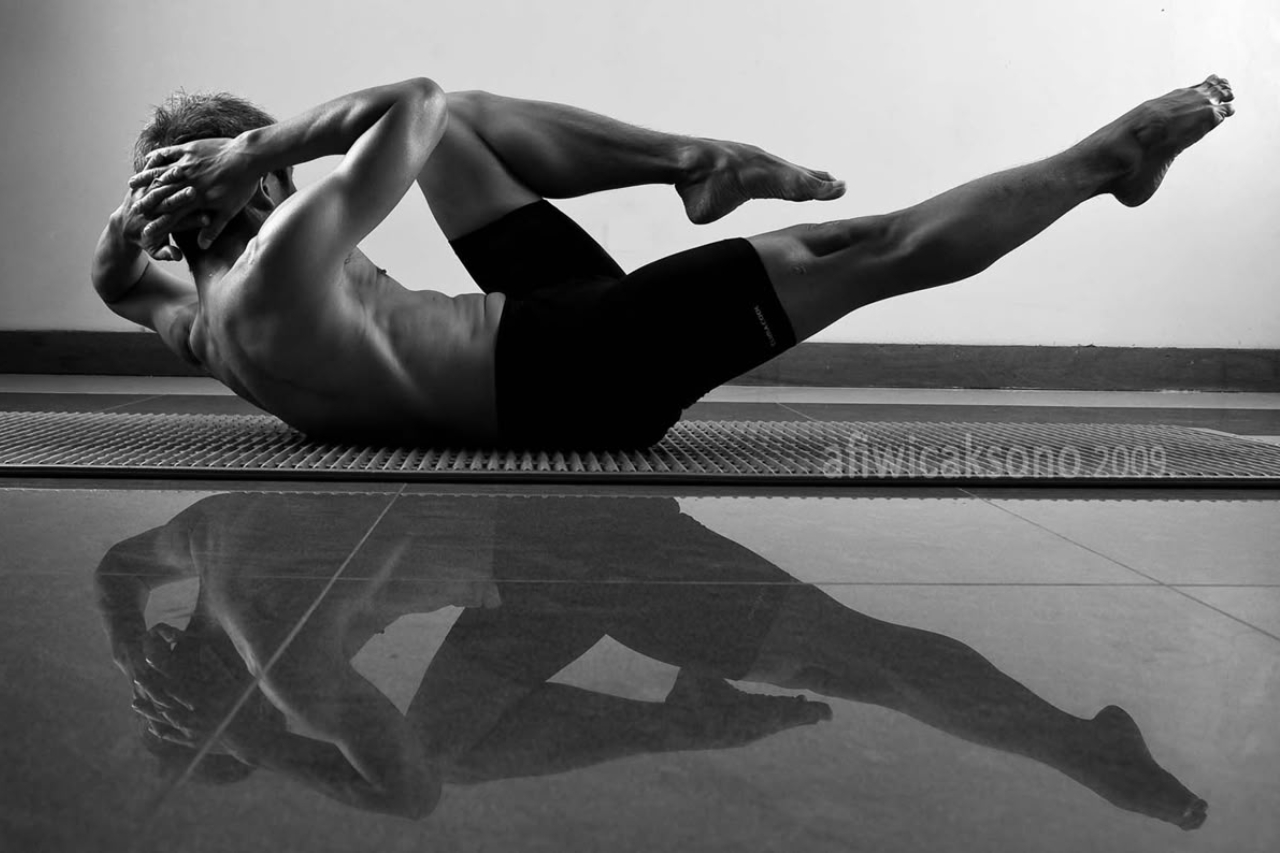
core strength for men
Building Functional Core Strength After 40
This is where the Pilates criss-cross becomes especially useful. Building functional core strength for men over 40 is less about chasing visible abs and more about maintaining spinal mobility exercises, balance, and rotational control. Most men lose those qualities gradually without realizing it.
The criss-cross helps restore them.
Instead of compressing the spine repeatedly like aggressive crunches often do, Pilates encourages controlled movement patterns that support longevity. That’s why more athletes and lifters are integrating Pilates into recovery days and mobility sessions.
Pilates Is Not “Easy”
A lot of guys still assume Pilates is just stretching with fancy breathing.
Not anymore. Modern Men’s Pilates 2026 programming focuses heavily on core strength for men, anti-rotation control, flexibility, and movement efficiency. Some of the strongest athletes now use Pilates to improve lifting mechanics and reduce joint stress.
And honestly, after a properly controlled criss-cross set, most people realize quickly how weak their deep core actually is. That’s not a bad thing. It’s useful information.
Better Than Crunches?
For most people, yes.
Traditional ab exercises for men usually focus on quantity. The Pilates criss-cross focuses on precision. One trains exhaustion. The other trains control.
There’s a difference.
If your goal is visible abs only, bicycle crunches might still have a place. But if you want rotational strength, stronger movement mechanics, and a healthier spine, the Pilates criss-cross offers far more long-term value. It develops the kind of core strength that actually improves how your body performs outside the gym. That’s the real reason this move continues gaining traction in functional fitness trends. A stronger core should help you move better, lift better, and feel better. Not just burn for thirty seconds on a mat.